- Date de parution
-
septembre 2025
- Editeur
- Format
-
ebook (ePub)
- Type de DRM
-
Adobe DRM

Résumé
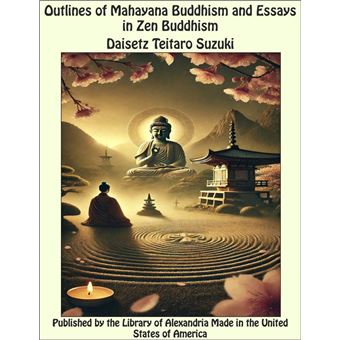
Zen in its essence is the art of seeing into the nature of one’s own being, and it points the way from bondage to freedom. By making us drink right from the fountain of life, it liberates us from all the yokes under which we finite beings are usually suffering in this world. We can say that Zen liberates all the energies properly and naturally stored in each of us, which are in ordinary circumstances cramped and distorted so that they find no adequate channel for activity. This body of ours is something like an electric battery in which a mysterious power latently lies. When this power is not properly brought into operation, it either grows mouldy and withers away or is warped and expresses itself abnormally. It is the object of Zen, therefore, to save us from going crazy or being crippled. This is what I mean by freedom, giving free play to all the creative and benevolent impulses inherently lying in our hearts. Generally, we are blind to this fact, that we are in possession of all the necessary faculties that will make us happy and loving towards one another. All the struggles that we see around us come from this ignorance. Zen, therefore, wants us to open a “third eye,” as Buddhists call it, to the hitherto undreamed-of region shut away from us through our own ignorance. When the cloud of ignorance disappears, the infinity of the heavens is manifested where we see for the first time into the nature of our own being. We now know the signification of life, we know that it is not blind striving, nor is it a mere display of brutal forces, but that while we know not definitely what the ultimate purport of life is, there is something in it that makes us feel infinitely blessed in the living of it and remain quite contented with it in all its evolution, without raising questions or entertaining pessimistic doubts. When we are full of vitality and not yet awakened to the knowledge of life, we cannot comprehend the seriousness of all the conflicts involved in it which are apparently for the moment in a state of quiescence. But sooner or later the time will come when we have to face life squarely and solve its most perplexing and most pressing riddles. Says Confucius, “At fifteen my mind was directed to study, and at thirty I knew where to stand.” This is one of the wisest sayings of the Chinese sage. Psychologists will all agree to this statement of his; for, generally speaking, fifteen is about the age youth begins to look around seriously and inquire into the meaning of life. All the spiritual powers until now securely hidden in the subconscious part of the mind break out almost simultaneously. And when this breaking out is too precipitous and violent, the mind may lose its balance more or less permanently; in fact, so many cases of nervous prostration reported during adolescence are chiefly due to this loss of the mental equilibrium. In most cases the effect is not very grave and the crisis may pass without leaving deep marks. But in some characters, either through their inherent tendencies or on account of the influence of environment upon their plastic constitution, the spiritual awakening stirs them up to the very depths of their personality. This is the time you will be asked to choose between the “Everlasting No” and the “Everlasting Yea.” This choosing is what Confucius means by “study,” it is not studying the classics, but deeply delving into the mysteries of life. Normally, the outcome of the struggle is the “Everlasting Yea,” or “Let thy will be done”; for life is after all a form of affirmation however negatively it might be conceived by the pessimists. But we cannot deny the fact that there are many things in this world which will turn our too sensitive minds towards the other direction and make us exclaim with Andreyev in “The Life of Man”: “I curse everything that you have given. I curse the day on which I was born. I curse the day on which I shall die. I curse the whole of my life.

eBook avec Kobo by Fnac
Des milliers de livres partout avec vous grâce aux liseuses et à l'appli Kobo by Fnac. Une expérience de lecture optimale pour le même confort qu'un livre papier.
En savoir plusAvis clients
Soyez le premier à partager
votre avis sur ce produit
Artistes du même univers

Caractéristiques
- Auteur
- Editeur
- Date de parution
-
septembre 2025
- EAN
-
9781465564641
- ISBN
-
9781465564641
- Type de DRM
-
Adobe DRM
- Droit d'impression
-
Non autorisé
- Droit de Copier/Coller
-
Non autorisé
- Compris dans l'abonnement ebooks
-
Oui
- SKU
-
14793624